Artificial Creativity
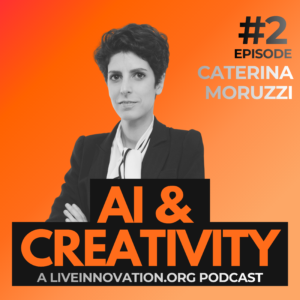
This conversation is part of the AI & Creativity podcast series, where I talk with the researchers, artists, and founders shaping how machines and human creativity meet. In this episode I spoke with Caterina Moruzzi, a Chancellor’s Fellow in Design Informatics at the University of Edinburgh and a BRAID Research Fellow, whose work sits at the intersection of the philosophy of art, human and artificial creativity, and the philosophy of AI. As Co-Investigator on the UKRI-funded CoSTAR RealTime Lab and DECaDE projects, and lead of the “Creativity, AI, and the Human” research cluster at the Edinburgh Futures Institute, she studies how emerging technologies disrupt creative workflows. Trained as both a philosopher and a classical pianist, Moruzzi brings an unusually grounded lens to a debate that’s usually dominated by hype: not “will AI replace artists,” but how agency, intention, and responsibility get redistributed when algorithms enter the studio.
What Is Human-AI Co-Creativity?
Human-AI co-creativity is a framework that treats AI not as an autonomous author or competitor, but as a collaborative partner whose outputs only become meaningful through continuous human interaction, evaluation, and intentional direction.
This is a deliberate shift away from the question everyone reaches for first — “can the machine make art on its own?” Moruzzi argues that framing is a trap. Agency in a creative system isn’t a zero-sum contest between human and machine. It’s shared dynamically across the artist, the data the model was trained on, and the way the two interact. The interesting questions live in that shared space, not in whether the AI could theoretically replace the person using it.
Can AI Be an Author?
Moruzzi’s answer is a clear no — and her reasoning is philosophical rather than technical, which makes it hold up better than the usual “AI just remixes” argument.
Authorship, she argues, requires three things a model doesn’t have. The first is intentionality grounded in lived context: an algorithm recognises statistical patterns across historical data, but it has no subjective experience and no awareness of what its outputs mean in the world. The second is embodiment — the physical, perceptual grounding through which humans actually experience and interpret art. The third is moral responsibility. Authorship carries social and ethical accountability, and a model cannot be held responsible for what it produces. That leaves human direction as the only real source of authorship.
There’s a subtle point buried here that’s easy to miss. When an AI generates a striking image or melody, the creative moment doesn’t happen inside the machine — it happens in the human mind that evaluates the output and decides it means something. We project the meaning. The machine supplies the pattern.
Why Judging AI by Its Output Misses the Point
The dominant way of evaluating creative AI is to look at the product: does the generated image look convincing, does the music sound plausible? Moruzzi thinks this quietly reduces art to a commodity.
Genuine creativity, in her account, lives in the process — the iterative, often messy, embodied path of trial, error, physical feedback, and reflection. Judge a system only by its polished final output and you strip away the most valuable part of the creative journey: discovery itself. This is why she’s wary of tools that present themselves as one-click output generators. They optimise for the artefact and discard the process that made it worth caring about.
That connects directly to the larger question of AI abundance. When synthetic outputs become infinite and instant, the temptation is to value only the result. Moruzzi’s work is a reminder that for human creators, the result was never the whole point.
Designing Tools That Empower Instead of Automate
Because Moruzzi works alongside industry on how generative tools reshape real creative workflows, she’s concrete about what responsible design looks like.
The failure mode is an interface that becomes overly predictive — one that nudges everyone toward the same generic, “optimal” default and, in doing so, flattens personal expression. The alternative is a tool that behaves like a flexible extension of the artist: granular control over parameters, conditional settings, iterative feedback loops. The difference is philosophical as much as practical. A single “generate” button automates away human decision-making. A set of sliders and controls keeps the artist making the choices that carry their voice.
The Pianist’s Lens
One of the most useful analogies in the conversation comes from Moruzzi’s own background at the piano. Performing a classical score, she notes, is itself an act of interpreting a structured framework through personal touch, dynamics, and physical expression. A score constrains you — and yet no two performances are the same, because the human gives it meaning.
Co-creating with AI, in her view, works the same way. The algorithm is a framework, like a score. The artistry is in how a specific human interprets and directs it. Seen that way, the presence of a system doesn’t diminish authorship any more than a printed score diminishes a pianist’s.
What This Means for Creators and Developers
Several practical principles fall out of the conversation:
Design for interaction, not automation. If you build creative tools, favour sliders, conditional controls, and iterative loops over single-click generation. Give people decisions to make.
Protect the process. If you’re an artist using AI, deliberately build in moments of manual friction, curation, and physical experimentation, so your voice and intention stay central to the finished work.
Make attribution transparent. Establish workflows that clearly separate human direction from algorithmic generation, rather than blurring the two.
Watch the Full Conversation
Moruzzi’s contribution to the debate is to move it off the tired “human versus machine” axis and onto something more useful: how we share agency well. Algorithms can mimic the patterns of past art, but they can’t care about the work they produce or grasp why it matters to a human audience. That gap — caring, intending, being responsible — is exactly where the human artist remains indispensable.
The full interview goes deeper into authorship, computational aesthetics, and what it takes to design AI that empowers creatives rather than replacing them. Watch it on the LiveInnovation YouTube channel.